
What is Ehrlichia?Ehrlichia is a type of bacteria that infects the white blood cells of dogs. Ehrlichia is spread between dogs by the brown dog tick. There are several different types of Ehrlichia (named after the person who discovered it - Mr Ehrlich). The type we have in Australia is Ehrlichia canis.. Ehrlichia canis infections can be very severe and make some dogs very sick or even kill them. Ehrlichia canis particularly infects the cell called platelets that are involved in clotting. Additionally the disease causes an inflammatory storm around the body. Because they hide inside the blood cell, it can make it very hard to kill the bacteria. | 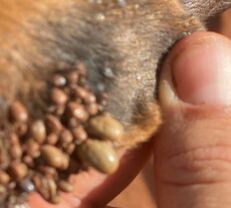 |
Should I be concerned for my dog? What are the Symptoms?
Ehrlicihia is a very serious illness affecting the clotting factors, immune system and the kidneys of the dog. Without treatment, many dogs will die from this disease.
| There are three stages to this disease and there is some cross-over between the three stages. Early symptoms can include:
Subclinical / Carrier Phase
End Stage (a few months to many years into the disease)
The early and subclinical stage is generally easily treated, but the end stage disease can be very hard to treat. | 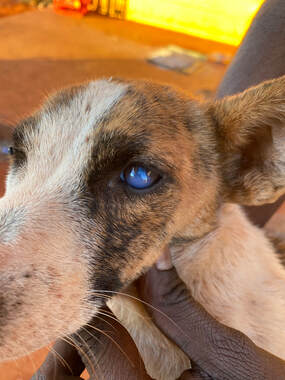 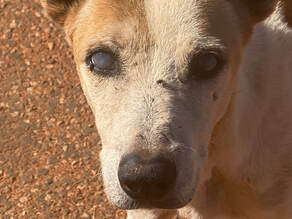 |
How can I tell if my dog has Ehrlichia?
A simple blood test is all that is required to see if your dog has Ehrlichia. A complete blood count is performed and if there is indication of low clotting factors known as platelets, then there is a strong chance that your dog has Ehrlichia and treatment should be started. The blood sample will then be sent for confirmation at special labs.
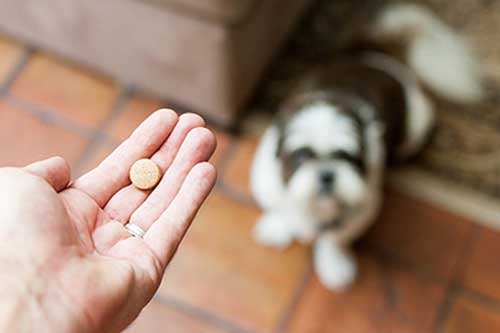 | Can Ehrlichia canis be Treated?Yes. Ehrlichia can be treated in the early and subclinical stages with the antibiotic doxycycline. End stage disease can be very difficult or near impossible to treat. There however have been some new experimental treatments for the end stage disease and hopefully in the future we will have better options. It is important that a full course of medication is given as if some bacteria is left behind, then the infection can recur |
Can my dog catch it again?
Unfortunately yes. There has been cases where dogs have been re-infected. So prevention is really important
Can people catch this disease?
It is very unlikely for people to catch this disease. There have been no human cases in Australia or South East Asia of this strain.
Is there a vaccine for Ehrlichia?
There are no vaccines for Ehrlichia.
How do I prevent this disease?
Ehrlichia is quickly transmitted by ticks. It only takes as little as 3 hours of tick feeding for Ehrlichia to be transmitted from the tick to the dog. Additionally, recent evidence shows that Ehrlichia can be passed from the adult ticks to baby ticks, so once it is in an area, the ticks will continue to transmit this disease. Hence prevention is key to stopping this disease.
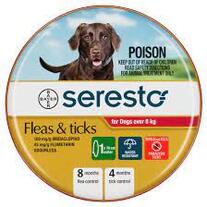
Primary preventative - It is important to use a product that repels ticks. Two products have shown to be extremely effective in preventing tick bites and Ehrlichia are SERESTO COLLARS and ADVANTIX SPOT ON. They are over 90% effective in preventing Ehrlichia
Primary preventative - It is important to use a product that repels ticks. Two products have shown to be extremely effective in preventing tick bites and Ehrlichia are SERESTO COLLARS and ADVANTIX SPOT ON. They are over 90% effective in preventing Ehrlichia
 |  |
Secondary preventative - It is recommended that a back up treatment is used that kills the ticks. Products such as Bravecto and Nexgard are excellent products that kill the tick but take 5 to 24 hours to kill them. So these are not great as a primary product, as they are only about 70% effective. But when combined with a primary product, it reduces the risk of your dog contracting Ehrlichia even further.
How did it get here?
This disease came from overseas. In mid 2020, Ehrlichia was discovered in Kununurra, WA for the first time. Within a week of its discovery, through the work of our vets, it was found to be in Katherine and Central Australia. And within months, a true picture emerged showing it expanding throughout northern WA and the NT. We were able to look back at cases and believe it may have been around in 2018, but likely not prior to that. We now know we have the South East Asian strain of this disease and somehow it was introduced into Australia. The strain we have is particularly severe, but so far we have seen in the early stages that it can be treated.
Our clinics in Katherine and Alice Springs continue to investigate treatment options for this horrible disease.
Our clinics in Katherine and Alice Springs continue to investigate treatment options for this horrible disease.
 RSS Feed